
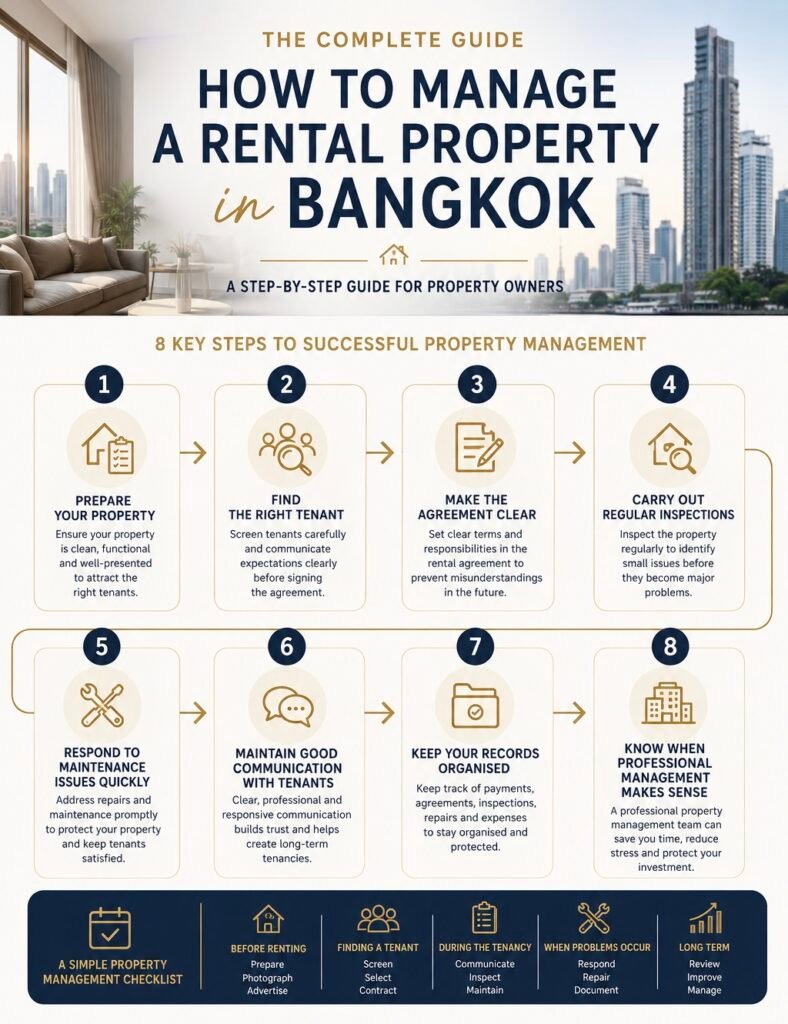
Owning a rental property in Bangkok can be a rewarding long-term investment, but managing a property successfully involves much more than collecting rent each month.
From preparing your property and finding the right tenant to handling maintenance, inspections, and day-to-day communication, property owners have many responsibilities to consider.
For owners who live overseas or have limited time to manage their property themselves, these responsibilities can become particularly challenging.
The good news is that property management does not have to be complicated when each stage of the rental process is approached systematically.
In this guide, we look at the key steps every Bangkok property owner should understand when managing a rental property.
1. Prepare Your Property Before Finding a Tenant
Good property management starts before the property is even advertised.
Before looking for a tenant, make sure the property is clean, functional, and presented in a way that attracts the right audience.
Consider checking:
- Furniture and appliances
- Air conditioning
- Plumbing
- Lighting and electrical systems
- Walls, flooring, and doors
- Kitchen and bathroom condition
- Overall cleanliness
High-quality photographs and an accurate property description are also important when marketing a rental.
A well-prepared property can make a stronger first impression and help attract suitable tenants.
Related guide: Preparing Your Property for Rent
2. Find the Right Tenant
Getting a tenant quickly is important, but finding the right tenant can be more valuable in the long term.
A structured screening process can help property owners understand whether a prospective tenant is suitable for the property.
Depending on the situation, owners may consider:
- Employment information
- Ability to meet rental payments
- Intended length of stay
- Number of occupants
- Previous rental experience
- Specific property requirements
Communication is equally important.
Discuss expectations clearly before signing the agreement, including relevant property rules, payment arrangements, and maintenance responsibilities.
Taking time to screen tenants carefully can help reduce potential problems later.
Related guide: How to Screen Tenants: 8 Steps Every Property Owner Should Follow
3. Make the Rental Agreement Clear
Once a suitable tenant has been selected, the next step is establishing clear expectations through the rental agreement.
The agreement should clearly explain the responsibilities of both the property owner and tenant.
Important areas may include:
- Rental payments
- Security deposit
- Lease duration
- Maintenance responsibilities
- Property rules
- Notice requirements
- Move-out procedures
Owners should ensure that their agreements comply with applicable laws and regulations and seek professional advice when necessary.
Clear documentation can help prevent misunderstandings and make the tenancy easier to manage.
4. Carry Out Regular Property Inspections
Property management doesn’t stop once the tenant moves in.
Regular inspections can help owners identify small problems before they develop into expensive repairs.
During an inspection, owners or property managers may check:
Interior
- Walls and ceilings
- Flooring
- Furniture
- Appliances
- Doors and windows
Kitchen and bathroom
- Plumbing
- Drainage
- Leaks
- Moisture or mould
- Fixtures
Other areas
- Air conditioning
- Balcony
- Parking
- General property condition
Inspections should always be arranged appropriately and with respect for the tenant’s privacy and the terms of the tenancy agreement.
Keeping records and photographs where appropriate can also help owners track the property’s condition over time.
Related guide: Why Regular Property Inspections Protect Your Rental Investment
5. Respond to Maintenance Issues Quickly
Even a well-maintained property will eventually require repairs.
A small leaking pipe, faulty air conditioner, or damaged appliance can become a much larger problem if it isn’t addressed quickly.
A proactive maintenance approach can help:
- Protect the property’s condition
- Reduce unexpected repair costs
- Improve tenant satisfaction
- Prevent small problems from becoming major ones
For owners who are not based in Bangkok, coordinating contractors and following up on repairs can be particularly difficult.
Having a reliable system for reporting, arranging, and monitoring maintenance can make a significant difference.
6. Maintain Good Communication With Tenants
Successful property management is also about relationships.
Tenants are more likely to have a positive rental experience when communication is clear, professional, and responsive.
Property owners should establish clear communication regarding:
- Rental payments
- Maintenance requests
- Inspections
- Repairs
- Property rules
- Lease-related questions
Good communication can help resolve small problems before they become larger disputes and can contribute to longer, more stable tenancies.
7. Keep Your Property Management Records Organised
Managing a rental property involves more documentation than many first-time landlords expect.
Depending on the property and tenancy, owners may need to keep track of:
- Rental payments
- Agreements
- Inspection records
- Maintenance requests
- Repair invoices
- Tenant communications
- Property-related expenses
Keeping these records organised makes it easier to understand the property’s performance and respond when questions or problems arise.
It can also be particularly valuable for owners who have multiple properties or live outside Thailand.
8. Know When Professional Property Management Makes Sense
Managing one property yourself may initially seem simple.
However, as responsibilities increase, owners may find that managing tenants, maintenance, inspections, payments, and documentation takes considerable time.
Professional property management can provide support across the entire rental process.
Instead of dealing with each issue separately, owners can have one professional team coordinate areas such as:
- Property marketing
- Tenant screening
- Rental administration
- Inspections
- Maintenance
- Tenant communication
- Ongoing property management
This can be particularly useful for overseas owners or owners who want to remain involved in their investment without handling every day-to-day responsibility themselves.
A Simple Property Management Checklist
For owners who want to stay organised, the rental journey can be simplified into five stages:
- Before renting
Prepare → Photograph → Advertise
- Finding a tenant
Screen → Select → Contract
- During the tenancy
Communicate → Inspect → Maintain
- When problems occur
Respond → Repair → Document
- Long term
Review → Improve → Manage
Following a consistent process can make property ownership more predictable and easier to manage.
Frequently Asked Questions
Is managing a rental property in Bangkok difficult?
It depends on the property, tenant, and owner’s availability. Managing a rental involves more than collecting rent, including communication, maintenance, inspections, and administration.
Should I manage my Bangkok property myself?
Some owners prefer to manage their property independently, while others choose professional property management to save time and have experienced support.
Is professional property management useful for overseas owners?
It can be particularly useful because owners living outside Bangkok or Thailand may find it difficult to attend inspections, coordinate repairs, or communicate with tenants in person.
What does a property management company do?
Services vary by company, but professional property managers may assist with marketing, tenant screening, rental administration, inspections, maintenance coordination, and ongoing tenant communication.
Successful rental property ownership requires more than finding a tenant and collecting monthly rent.
From preparing the property and screening tenants to carrying out inspections, coordinating maintenance, and maintaining good communication, every stage contributes to the long-term success of the rental.
For busy owners and those living overseas, professional property management can make these responsibilities easier to coordinate while helping protect the condition and value of the property.
The most important principle is simple:
Good property management is proactive, organised, and focused on the long-term relationship between the owner, the property, and the tenant.
Need Professional Support Managing Your Bangkok Property?
At Siam Property Management, we support property owners throughout the rental journey, helping coordinate the practical responsibilities involved in managing a property in Bangkok.
Whether you need support with finding a tenant, arranging maintenance, carrying out inspections, or managing your property on an ongoing basis, professional assistance can give you greater peace of mind while keeping your investment properly managed.
Contact Siam Property Management to discuss how your property can be managed more efficiently.