
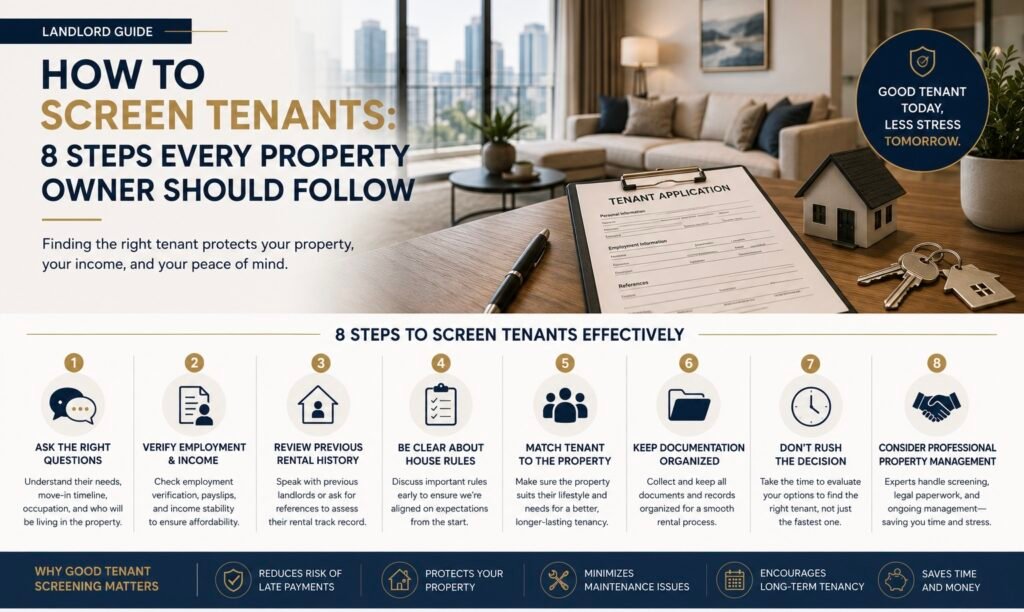
Finding a tenant quickly is important but finding the right tenant is even more important.
Many property owners focus on filling a vacancy as soon as possible. However, choosing the wrong tenant can lead to late payments, property damage, lease disputes, and unnecessary stress.
Tenant screening is not about making the process difficult; it’s about reducing risk while building a positive landlord-tenant relationship from the beginning.
Whether you own a condominium, townhouse, villa, or house in Bangkok, following a structured screening process can help protect both your property and your investment.
Why Tenant Screening Matters
Every tenancy is different, but most landlord problems begin long before the tenant moves in.
A careful screening process helps you:
- Reduce the risk of missed rental payments
- Protect your property’s condition
- Minimise unexpected maintenance issues
- Encourage longer-term tenancies
- Save time and money in the future
A little preparation today can prevent significant problems later.
1. Ask the Right Questions During the First Conversation
The first conversation is an opportunity to understand whether the property is suitable for the tenant.
Useful questions include:
When do you plan to move?
How long are you planning to stay?
Who will be living in the property?
Do you have pets?
Have you rented before?
These questions help determine whether expectations match what your property offers.
2. Verify Employment and Income
Reliable income is one of the strongest indicators that rent payments are likely to remain consistent.
Depending on the tenant, property owners may request:
- Employment confirmation
- Company information
- Recent payslips
- Proof of income
The goal isn’t to make the process difficult—it’s simply to understand whether the tenant is financially prepared for the rental commitment.
3. Review Previous Rental History
Previous rental experience can provide valuable insight.
If appropriate, ask about:
- Previous landlords
- Length of previous tenancy
- Reason for moving
- Any previous rental issues
Many responsible tenants are happy to provide references when requested.
4. Be Clear About House Rules
Misunderstandings often happen when expectations are not discussed early.
Before signing a lease, explain important topics such as:
- Pet policy
- Smoking policy
- Maintenance responsibilities
- Visitor rules
- Utility payments
Clear communication helps both parties feel more confident.
5. Check That the Property Matches the Tenant’s Needs
Not every tenant is the right fit for every property.
For example:
- Families may prioritise nearby schools.
- Professionals may prefer easy BTS or MRT access.
- Long-term tenants may value storage and workspace.
- Expats may look for fully furnished properties.
Matching the property to the tenant often results in longer, more successful tenancies.
6. Keep Documentation Organised
Throughout the screening process, keep records organised.
Examples include:
- Application forms
- Identification documents
- Employment information
- Rental agreements
- Communication records
Well-organised documentation helps avoid confusion later.
7. Don’t Rush the Decision
An empty property can feel frustrating, but accepting the first applicant without proper screening isn’t always the best solution.
Taking a little extra time to evaluate applicants carefully may reduce future issues and create a more stable tenancy.
Sometimes, waiting a few extra days for the right tenant is the better long-term decision.
8. Consider Professional Property Management
Managing tenant enquiries, screening applications, preparing contracts, and coordinating move-ins all require time and experience.
Many property owners choose professional property management because it simplifies the process while helping reduce risk.
Experienced property managers can handle the screening process consistently, allowing owners to focus on their investment rather than day-to-day administration.
Common Mistakes Property Owners Make
Some of the most common mistakes include:
Accepting the first applicant too quickly
Not verifying employment
Skipping reference checks
Failing to explain house rules
Incomplete documentation
Prioritising speed over quality
Avoiding these mistakes often leads to a smoother rental experience.
Frequently Asked Questions
How long should tenant screening take?
The process varies depending on the applicant, but taking the time to verify important information is usually worthwhile.
Should I accept the first interested tenant?
Not necessarily. Comparing applicants and completing basic checks helps you make a more informed decision.
Why is tenant screening important?
Good tenant screening reduces potential risks, protects your property, and helps create a positive rental experience for both landlords and tenants.
Choosing the right tenant is one of the most important decisions a property owner makes.
A structured screening process helps reduce risk, protect your investment, and build a successful landlord-tenant relationship from the beginning.
While no screening process can guarantee a perfect tenancy, careful preparation significantly improves the chances of a smooth and successful rental experience.
Need Help Finding the Right Tenant?
At Siam Property Management, we support property owners through every stage of the rental process – from marketing your property and screening tenants to ongoing property management.
If you’re looking for a professional partner to help protect your property and simplify property management, contact Siam Property Management for a consultation today.