
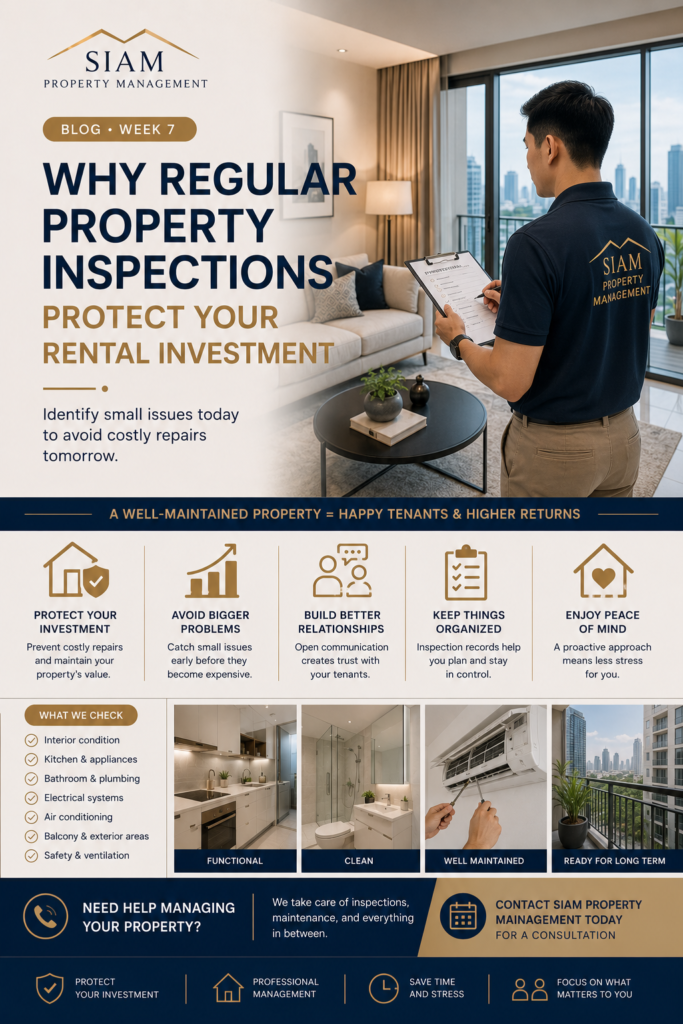
Owning a rental property is more than collecting monthly rent. One of the most effective ways to protect your investment is through regular property inspections.
Many property owners assume that once a tenant has moved in, there is little else to monitor until the lease ends. However, routine inspections help identify small issues before they become expensive repairs, ensure the property remains in good condition, and strengthen communication between landlords and tenants.
Whether you own a condominium, townhouse, house, villa, or apartment in Bangkok, having a structured inspection process can help preserve your property’s value and reduce long-term maintenance costs.
What Is a Property Inspection?
A property inspection is a scheduled visit to check the overall condition of your rental property while it is occupied.
The purpose is not to inconvenience tenants but to ensure that the property is being maintained properly and to identify any issues that may require attention.
A professional inspection focuses on the property’s condition rather than the tenant’s personal belongings.
Why Regular Inspections Are Important
Routine inspections benefit both landlords and tenants.
They help:
- Identify maintenance issues early
- Prevent small problems from becoming major repairs
- Protect the property’s long-term value
- Improve communication with tenants
- Plan future maintenance more effectively
Regular inspections also demonstrate that the property is being professionally managed.
What Should Be Checked During an Inspection?
Every inspection should follow a consistent checklist.
Common inspection areas include:
Interior
- Walls and ceilings
- Flooring
- Doors and windows
- Furniture condition
- Kitchen appliances
- Air conditioning units
Bathroom
- Water leaks
- Drainage
- Water pressure
- Mould or moisture
- Ventilation
Electrical
- Lighting
- Switches
- Power outlets
- Smoke detectors (if installed)
Exterior
- Balcony
- Outdoor areas
- Parking space
- Building access
Using the same checklist during every inspection helps create consistency over time.
How Often Should a Property Be Inspected?
Inspection frequency depends on the lease agreement and local regulations.
Many landlords schedule inspections every few months during a tenancy, while others conduct inspections:
- Before move-in
- During the tenancy
- At move-out
Always provide tenants with appropriate notice before entering the property and respect their privacy.
Common Issues Found During Inspections
Regular inspections often reveal small issues that tenants may not report immediately.
Examples include:
- Minor plumbing leaks
- Air conditioning requiring servicing
- Loose door handles
- Damaged silicone in bathrooms
- Small wall damage
- Appliance wear and tear
Addressing these problems early is usually far less expensive than waiting until they become major repairs.
Good Communication Makes Inspections Easier
Property inspections should be transparent and respectful.
Inform tenants in advance about:
- The inspection date
- Approximate duration
- Purpose of the visit
Clear communication helps tenants feel comfortable while maintaining a positive landlord-tenant relationship.
Keep Detailed Inspection Records
After each inspection, record:
- Date of inspection
- Photos (where appropriate)
- Maintenance recommendations
- Completed repairs
- Follow-up actions
Keeping organised records helps track the property’s condition throughout the tenancy and can be useful when preparing for future tenants.
How Professional Property Management Helps
Coordinating inspections, arranging repairs, documenting findings, and communicating with tenants all require time and organisation.
Many property owners choose professional property management because these tasks are handled consistently and professionally.
Regular inspections become part of an ongoing maintenance strategy rather than reacting only when problems occur.
Frequently Asked Questions
Are property inspections allowed during a tenancy?
Yes, provided they follow the lease agreement and tenants receive appropriate notice beforehand.
Will inspections disturb tenants?
When scheduled properly and communicated clearly, inspections are usually brief and help maintain the property for everyone’s benefit.
Why are inspection records important?
Inspection records help document the property’s condition, monitor maintenance over time, and provide useful information at the end of a tenancy.
Regular property inspections are one of the simplest ways to protect your rental investment.
By identifying maintenance issues early, keeping organised records, and maintaining good communication with tenants, property owners can reduce unexpected costs while preserving the long-term value of their property.
A proactive inspection process creates a better experience for both landlords and tenants and contributes to a smoother rental journey.
Need Help Managing Your Property?
At Siam Property Management, we help property owners oversee every stage of the rental process—from tenant screening and routine inspections to maintenance coordination and ongoing property management.
If you’d like professional support in protecting your investment, contact Siam Property Management today for a consultation.